
How to photograph your pet so a photo actually shows its breed
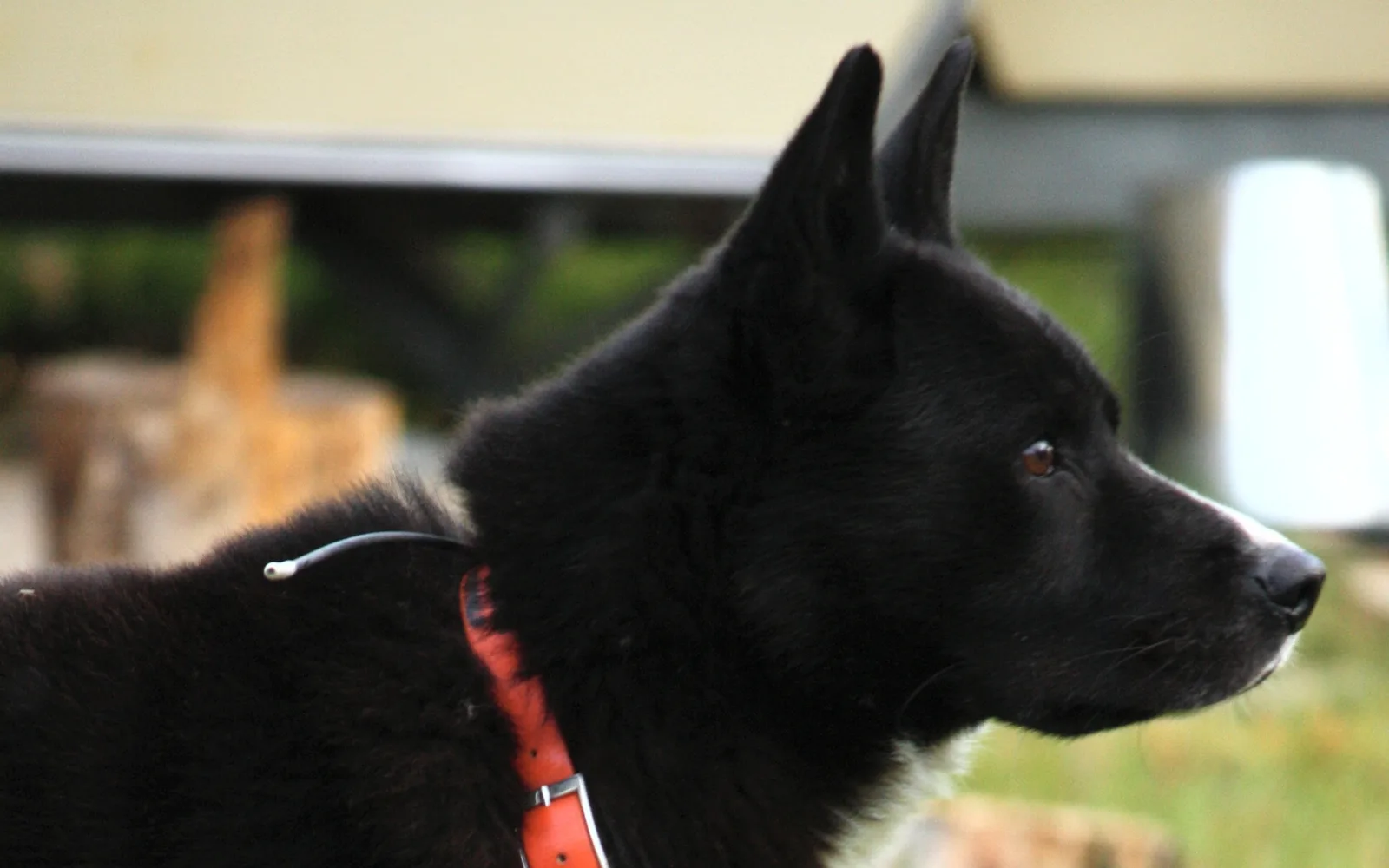
The traits that officially define a breed, body proportion, ear set, tail carriage, coat colour, are exactly the things a bad photo hides. Official breed standards describe these traits in specific, visible terms (American Kennel Club, n.d.-a; American Kennel Club, n.d.-b; American Kennel Club, n.d.-c), so the fastest way to improve any breed-ID photo, whether for a person's opinion or a photo-reading app, is to make sure the shot actually captures them: a side view for body shape, a clear face for head detail, and even light for true colour.
Key points
- A side-on, full-body shot shows proportion, topline and tail, details official breed standards describe in exactly those terms.
- A clear, well-lit face shows ear set, ear size and muzzle shape, all specifically called out in breed standards.
- Natural, even light shows a coat's true colour; standards describe shades precisely, and a flash or dim bulb can distort them.
- Cropping out ears, tail or feet removes exactly the parts of the body breed standards reference most.
- The same principles apply across species: side view, clear face, even light, nothing cropped out.
Why does a side-on photo matter for breed ID?
A side-on, full-body photo is the only angle that shows proportion: how long a body is compared with how tall it stands. The Labrador Retriever's official American Kennel Club standard spells this out in exact terms: "length from the point of the shoulder to the point of the rump is equal to or slightly longer than the distance from the withers to the ground," and "distance from the elbow to the ground should be equal to one half of the height at the withers" (American Kennel Club, n.d.-a). None of that is visible in a photo taken from the front, or one where the dog is sitting, or one cropped to just the head.
Tail carriage and gait are the same story. The Labrador standard calls out its "otter" tail as one of the breed's most distinguishing features (American Kennel Club, n.d.-a), and the German Shepherd Dog standard describes the breed as fundamentally "a trotting dog," with a structure built around that movement (American Kennel Club, n.d.-c). A photo that crops out the tail, or catches a dog mid-jump rather than standing, hides the very details a standard is built around.
Why does a clear face photo matter?
The face carries a different set of traits: ear set, ear size, eye shape, muzzle length. The Labrador standard again gives a concrete example: ears should "hang moderately close to the head, set rather far back, and somewhat low on the skull; slightly above eye level," and should "not be large and heavy, but in proportion with the skull and reach to the inside of the eye when pulled forward" (American Kennel Club, n.d.-a). You can only judge any of that from a face that is in focus, well lit, and not turned away from the camera. A face half in shadow, or blurred by motion, hides the exact detail a standard, or a person trying to make a visual guess, would be looking for.
This is also why apps that read photos for a breed estimate, including Furrigins, ask for more than one angle: a side photo for body shape plus a clear face for head detail, with other angles optional. One photo alone, especially a close head-on crop, leaves out whatever the other angles would have shown.
Does lighting really change how a coat looks?
Yes, and breed standards are specific enough about colour that lighting can genuinely mislead a viewer. The Golden Retriever's official standard describes its coat colour as "rich, lustrous golden of various shades," noting that "feathering may be lighter than rest of coat" (American Kennel Club, n.d.-b). That kind of subtle shading is easy to lose entirely under a flash, which can bleach out warm tones, or under dim yellow indoor lighting, which can shift a true colour toward orange or brown. Natural daylight, ideally soft and indirect rather than harsh midday sun, gives the most accurate read of a coat's actual colour.
| Photo element | What it reveals | Standard language it maps to |
|---|---|---|
| Side-on, full body | Body proportion, topline, tail carriage | "Length from the point of the shoulder to the point of the rump..." (American Kennel Club, n.d.-a) |
| Clear, well-lit face | Ear set and size, eye shape, muzzle shape | "Ears should not be large and heavy, but in proportion with the skull..." (American Kennel Club, n.d.-a) |
| Even, natural light | True coat colour and shading | "Rich, lustrous golden of various shades" (American Kennel Club, n.d.-b) |
| Pet standing still, not cropped | Gait-related build and overall silhouette | "A German Shepherd Dog is a trotting dog, and its structure has been developed..." (American Kennel Club, n.d.-c) |
What should you avoid cropping out?
Ears, tail and feet are the three things people crop out most often, usually by accident, and they are also three of the most referenced details in breed standards. An ear cropped out of frame removes set and size entirely. A tail cut off at the edge of the photo removes carriage and length. Feet and legs cropped tight around the body remove the proportion cues a side view is meant to show in the first place. If in doubt, step back and include the whole animal, then crop afterward if you want a tighter shot for something else.
Does this apply to cats, rabbits, birds and horses too?
The general principles carry across species even though the specific wording differs by registry and species: a clear side view for body shape, a clear, well-lit face for head detail, even natural light for true colour, and nothing important cropped out of frame. This article grounds its specific quoted language in official dog breed standards, since those were the ones available to check directly for this piece. The underlying idea, that a good photo needs to actually show the traits a breed is defined by, applies just as much to a cat's ear shape, a rabbit's body type, a bird's markings or a horse's build.
If you're specifically trying to work out what's in a mixed or rescue dog's background, a better photo only gets you so far; see why mixed and rescue dogs are especially hard to breed-ID from a photo for what coat and body shape can and can't actually tell you, and how a photo-based guess compares with a DNA test for the more reliable option when you need a confirmed answer.
A quick checklist before you take the photo
- Get down to roughly your pet's eye level rather than shooting down from standing height.
- Take one photo side-on, showing the whole body from nose to tail.
- Take one photo of the face, straight on, in focus, with the eyes open.
- Shoot in daylight near a window or outdoors, and avoid direct flash.
- Keep ears, tail and feet inside the frame.
- Wait for your pet to be still rather than mid-movement, to avoid blur.
A photo, however well taken, only ever supports a visual estimate. It is not a DNA test and not veterinary advice. If you have a health concern about your pet, see a vet.
Frequently asked questions
Why does a side-on photo matter for breed ID?
Official breed standards describe body proportion, topline and tail set in terms that only a side-on, full-body photo can show, such as the Labrador Retriever standard's description of body length against height at the withers.
Why does a clear face photo matter?
Breed standards describe ear set, ear size relative to the skull, eye shape and muzzle shape in detail. A face that is blurry, in shadow, or turned away hides exactly the traits a standard, or a person, would look for.
Does lighting actually change how a pet's coat looks in a photo?
Yes. Official coat colour descriptions, like the Golden Retriever standard's "rich, lustrous golden of various shades," depend on seeing true colour. A flash or dim indoor light can wash out or warp exactly the colour a standard describes.
What should I not crop out of a pet photo?
Ears, tail and feet. Breed standards repeatedly reference ear set, tail carriage and leg proportion, so cropping any of them out removes information a photo would otherwise show.
Does the same advice apply to cats, rabbits, birds and horses?
The same general principles apply: a clear side view, a clear face, even natural light, and nothing cropped out. This article grounds the specific examples in official dog breed standards, since those were the ones available to check directly.
References
- American Kennel Club (n.d.-a) Official Standard of the Labrador Retriever. Available at: https://images.akc.org/pdf/breeds/standards/LabradorRetriever.pdf (Accessed: 6 November 2026).
- American Kennel Club (n.d.-b) Official Standard of the Golden Retriever. Available at: https://images.akc.org/pdf/breeds/standards/GoldenRetriever.pdf (Accessed: 6 November 2026).
- American Kennel Club (n.d.-c) Official Standard of the German Shepherd Dog. Available at: https://images.akc.org/pdf/breeds/standards/GermanShepherdDog.pdf (Accessed: 6 November 2026).