
Dog breed from a photo vs a DNA test: what's the difference?
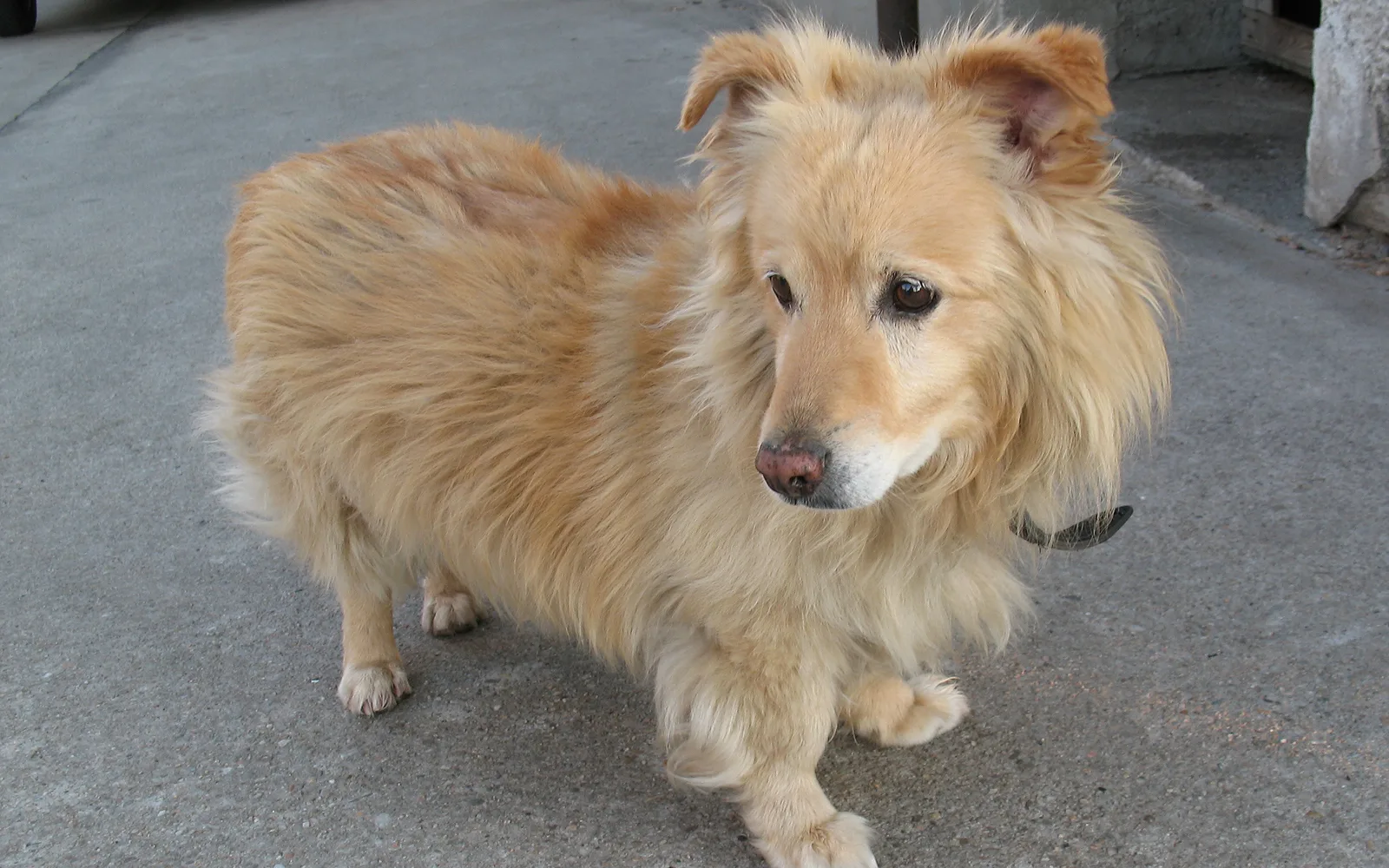

A photo-based breed guess is a visual estimate: a person or a program looks at coat, ears, size and shape and names the breed it looks most like. A DNA test is a lab result: it reads genetic markers from a cheek swab or blood sample and compares them against a reference panel of hundreds of breeds. They are different methods, and when researchers have checked visual guesses against DNA results side by side, the two have agreed only part of the time (Voith et al., 2009; Olson et al., 2015; Gunter, Barber and Wynne, 2018).
Key points
- A photo shows outward appearance; a DNA test reads genetic ancestry. They can disagree because looks and genes don't always line up in a mixed-breed dog.
- In one study, DNA confirmed an adoption agency's named breed in only 4 of 16 dogs (25%) it had been assigned to (Voith et al., 2009).
- In another, shelter staff called 52% of 120 dogs "pit bull-type" by eye; DNA signatures put the real figure at 21% (Olson et al., 2015).
- DNA test makers test for hundreds of breeds from a physical sample, not a photo (Embark, n.d.; Wisdom Panel, n.d.).
- Neither a photo-based guess nor a DNA test is veterinary advice or a medical diagnosis.
What can a photo actually tell you about a dog's breed?
A photo shows what is visible: coat length and colour, ear shape, body size, muzzle shape, tail carriage. A person, or a program trained on photos of known breeds, compares those visible traits with what it has learned about how different breeds typically look, then gives its best guess. That guess is a visual estimate of resemblance, not a reading of the dog's actual family tree.
The trouble is that a lot of distinct breeds can produce dogs that look broadly similar, and a dog with several breeds in its ancestry often doesn't look like a neat blend of all of them. One large study of shelter dogs found 125 distinct breeds across just two shelters, and only 4.9% of the dogs tested were purebred (Gunter, Barber and Wynne, 2018). Most of the dogs people see in shelters, and guess at by eye, are a genetic mix that a single glance can't unpack.
What does a DNA test actually check?
A dog DNA test reads genetic markers from a cheek swab, then compares the pattern against a reference database built from dogs of confirmed, known breed. Wisdom Panel describes its own sample step simply: "Vital insights about your dog are just a swab away" (Wisdom Panel, n.d.). Embark, another DNA test maker, says it tests "for 400+ breeds, types, and varieties, including dingoes, coyotes, wolves, and village dogs" (Embark, n.d.), and separately claims "99% breed ancestry accuracy" for its own test (Embark, n.d.). Wisdom Panel makes a similar claim about itself, describing its product as "the world's most accurate dog DNA test" and listing "430+ breeds" it screens for (Wisdom Panel, n.d.). Those are the companies' own claims about their own products, not independently audited figures, but they do tell you what the method is: a lab reading of DNA against a breed reference panel, not a look at a picture.
How often do visual guesses and DNA tests actually agree?
Three published studies have put this to the test, each by asking people experienced with dogs to name breeds by eye, then checking their guesses against DNA results from the same dogs.
| Study | Dogs and assessors | What the visual guess got right |
|---|---|---|
| Voith et al. (2009) | 20 dogs of unknown parentage; breed named by the adoption agency that placed them | DNA confirmed the named breed as a predominant ancestor in only 4 of 16 named dogs (25%); 87.5% of named dogs were missing at least one named breed in their DNA results |
| Olson et al. (2015) | 120 shelter dogs; 16 staff across 4 shelters judging "pit bull-type" by eye | Staff collectively called 52% of dogs pit bull-type; DNA signatures found 21%. Individual sensitivity against DNA ranged from 33% to 75% |
| Gunter, Barber and Wynne (2018) | 919 shelter dogs DNA-tested at two US shelters; staff breed calls checked against DNA for 384 dogs at one shelter (SDHS) | Staff at one shelter matched at least one real breed for 67.7% of dogs, but that fell to 10.4% once asked to name more than one breed |
The pattern across all three: naming one dominant-looking breed by eye is sometimes close to right, but naming the full mix almost never is. A related study showed video of the same 20 dogs from Voith et al. (2009) to a wider group of dog professionals; on average, fewer than 30% could name even a single breed that DNA testing later confirmed (reported in Gunter, Barber and Wynne, 2018).
Why do visual guesses and DNA results disagree so much?
Coat length, ear shape and body size are controlled by a relatively small number of genes (Boyko et al., reported in Gunter, Barber and Wynne, 2018), so two dogs can share a look while having very different ancestry everywhere else in their DNA. A dog can inherit the coat of one great-grandparent and the ears of another and still carry genetic material from four or five other breeds that leave no obvious visual trace. Gunter, Barber and Wynne (2018) also found that the more a dog's DNA actually did skew toward a visually distinctive type, the easier staff found it to call correctly, which suggests the eye is reading strong, obvious signals well and missing the quieter, mixed-in ones almost entirely.
If your own dog is a rescue or a mix, the same pattern applies to figuring out what's in that particular mix from looks alone: see why mixed and rescue dogs are especially hard to breed-ID from a photo for more on what coat and body shape can and can't tell you.
Can a photo ever be a useful first guess?
Yes, with the right expectations. A photo-based read, like the free first Origin Story in the Furrigins app, gives a quick visual opinion of which breed a pet looks like from everyday phone photos, with no account and no lab sample. That is useful as a starting point and a bit of fun, but it is a visual estimate, not a DNA test, a pedigree, or a breed registration, and it is not veterinary advice. If you need a confirmed answer, for a legal, medical or breeding reason, only a DNA test or documented pedigree can give you that.
The photo itself matters too: a close-cropped, badly lit snapshot gives any viewer, human or software, less to go on than a clear, well-framed one. See how to photograph your pet so a photo actually shows its breed-typical traits.
So which one should you trust?
For a quick, free, curious first guess, a photo-based read is fine. For anything where the answer needs to be reliable, insurance, breed-specific rules, health screening for inherited conditions, or confirming a pedigree, a DNA test or paper pedigree is the only method in this article that the studies above actually used as their standard of truth. A photo can start the conversation; it can't finish it.
Frequently asked questions
Can a photo tell you a dog's exact breed mix?
No. A photo can only show what a breed looks like it resembles. Studies that checked shelter staff and adoption agency breed guesses against DNA results found the two agreed only part of the time, and agreement dropped further whenever more than one breed was being named.
Is a DNA test always right about a dog's breed?
A DNA test compares a dog's genetic markers against a reference panel built from dogs of known breed, and that is a different method entirely from looking at a photo. The studies in this article used DNA results as the yardstick, not photos, because genetic ancestry and outward appearance are not the same thing.
Why did shelter staff and DNA tests disagree so often about pit bull-type dogs?
One study found shelter staff collectively called 52% of 120 dogs pit bull-type by eye, while DNA signatures put the true figure at 21%. A visually distinctive look can make a dog look more like a certain type than its ancestry actually supports.
Can a photo-reading app or an experienced person get the full breed mix right?
Not reliably. The studies above show that visual guesses, whether from a shelter worker, an adoption agency or a quick photo read, agree with DNA results only part of the time, and agreement drops further once more than one breed is being named.
What's the fastest way to get any breed guess from a photo?
A photo-reading app or a knowledgeable person can give you an instant visual opinion. Treat it as a starting guess rather than a confirmed answer, in the same way the studies above treat a shelter worker's guess as an opinion to be checked, not a lab result.
References
- Embark Veterinary, Inc. (n.d.) What is the most accurate dog DNA test? Available at: https://embarkvet.com/blogs/resources/most-accurate-dog-dna-test (Accessed: 6 November 2026).
- Gunter, L.M., Barber, R.T. and Wynne, C.D.L. (2018) 'A canine identity crisis: Genetic breed heritage testing of shelter dogs', PLOS ONE, 13(8), e0202633. Available at: https://journals.plos.org/plosone/article?id=10.1371/journal.pone.0202633 (Accessed: 6 November 2026).
- Olson, K.R., Levy, J.K., Norby, B., Crandall, M.M., Broadhurst, J.E., Jacks, S., Barton, R.C. and Zimmerman, M.S. (2015) 'Inconsistent identification of pit bull-type dogs by shelter staff', The Veterinary Journal, 206(2), pp. 197-202. Available at: https://pubmed.ncbi.nlm.nih.gov/26403955/ (Accessed: 6 November 2026).
- Voith, V.L., Ingram, E., Mitsouras, K. and Irizarry, K. (2009) 'Comparison of adoption agency breed identification and DNA breed identification of dogs', Journal of Applied Animal Welfare Science, 12(3), pp. 253-262. Available at: https://pubmed.ncbi.nlm.nih.gov/20183478/ (Accessed: 6 November 2026).
- Wisdom Panel (n.d.) Wisdom Panel Breed Discovery. Available at: https://www.wisdompanel.com/en-us/dog-dna-tests/breed-discovery (Accessed: 6 November 2026).